
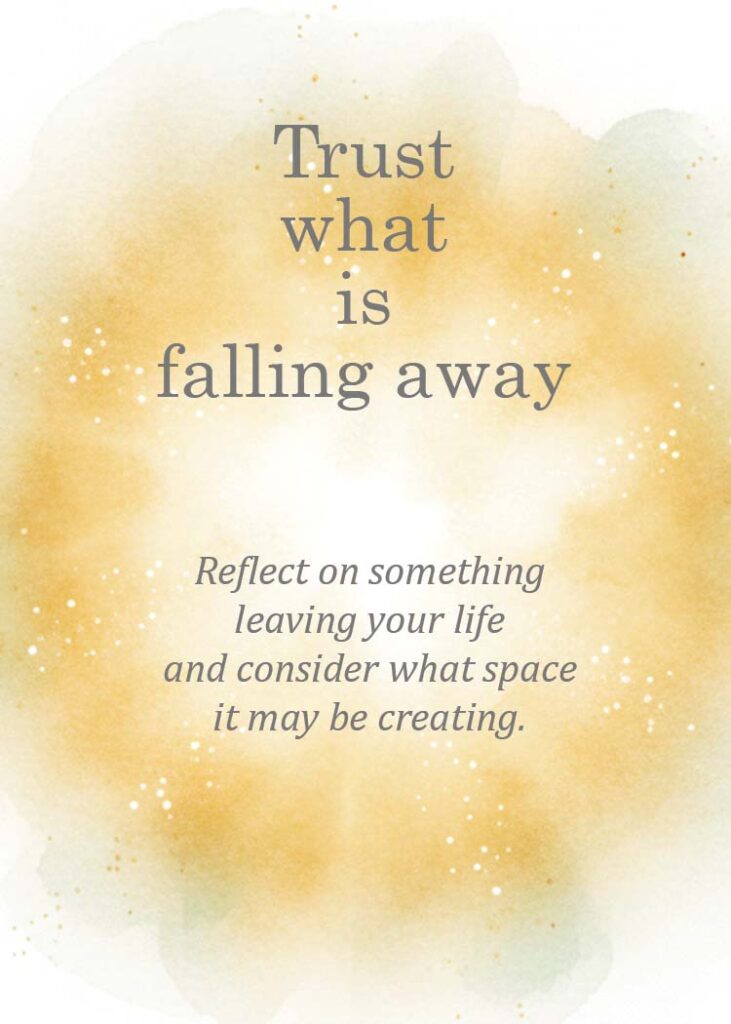
Loss often feels like failure because it interrupts expectation.
When something ends, the instinct is to interpret the absence as deficiency or mistake.
In reality, what falls away frequently does so because it no longer aligns with current direction, values, or capacity.
Trusting loss requires reframing it as transition rather than personal shortcoming.
Release creates space —emotionally, mentally, and practically— for new alignment to emerge.
Resistance prolongs attachment and delays integration.
Acceptance allows loss to be metabolized rather than carried.
What follows loss is not replacement, but reorganization.
When trust replaces resistance, renewal occurs without force.
The message reframes loss as a transitional process that creates space for new alignment.