
Chicken & Postage
I walked into a chicken fast food joint today. Nothing unusual about that.
Until I looked to the side…. and there, tucked into the corner, was a fully functioning post office. Its own entrance. Its own counter. Its own quiet little world.
Chicken and postage.
All in one place.
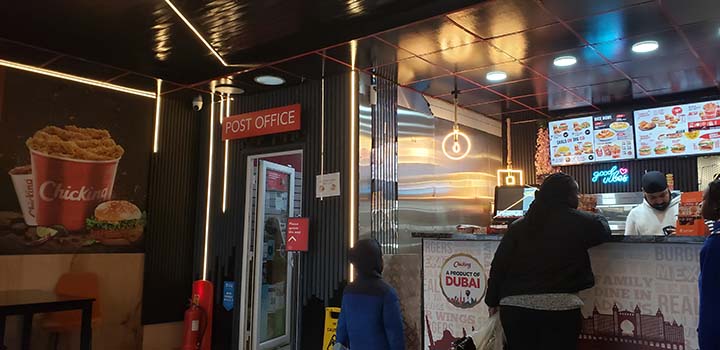
I paused for a moment, slightly confused, slightly amused… and then oddly impressed.
Because… why not?
And that got me thinking about all the things in life that don’t seem to go together.
ChihSang and karaoke.
Magic and burnout.
Corporate life and bubble artistry.
Travel and boredom.
Joy and uncertainty.
A library inside a nightclub.
Yoga in an airport terminal.
A tattoo studio next to a kindergarten.
Fine dining at a gas station.
A monastery with Wi-Fi passwords.
Luxury gyms with escalators.
Fast food and “slow living.”
A wedding in Las Vegas.
A suit and sneakers.
A salad and a double cheeseburger.
And then the more human ones:
Confidence and self-doubt.
Success and emptiness.
Freedom and fear.
Love and timing.
Being surrounded… and still feeling alone.
On paper, none of it quite fits.
If you tried to “brand” it, you’d probably clean it up. Make it make sense. Put it into neat categories so people could understand it more easily.
But life doesn’t really work like that. It’s messy combinations.
Unexpected pairings. A post office inside a fried chicken shop. And somehow it works.
Or maybe it doesn’t need to work at all. Maybe it just needs to exist.
We spend so much time trying to make our lives coherent. Linear. Explainable.
But the moments that feel the most alive are often the ones that don’t quite make sense.
The ones that surprise us.
The ones that make us pause and go, “Huh… didn t expect that.”
So maybe it’s okay that not everything about me fits neatly together.
Maybe it’s okay that I sing karaoke, perform magic, blow bubbles, reflect deeply, and still don’t have a clean answer when someone asks, “So… what do you do?”
Because somewhere between chicken and postage it all makes sense.
Or maybe it doesn’t.
Maybe it’s not random at all.
Maybe it’s just the universe… being creative.