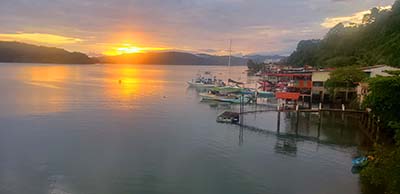
Day Two: The Very Small Plane and the Long Exhale
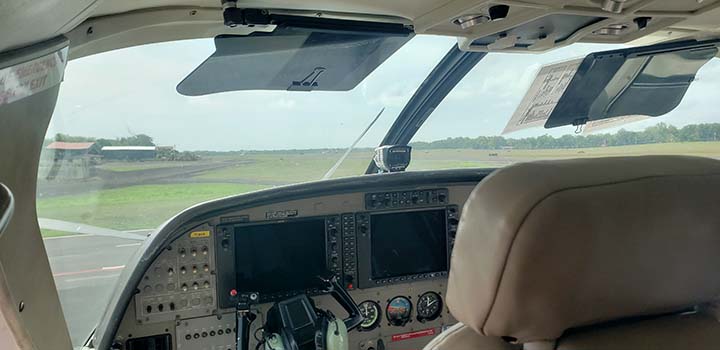
The plane is smaller than I imagined, which is impressive because I imagined it very small.
Fifteen seats. Maybe. I sit directly behind the pilot and copilot, close enough to see the instruments, close enough to feel like I should be paying rent for cockpit access. I pretend to read my Kindle — the international signal for I do this all the time even though I haven’t turned a page since boarding.
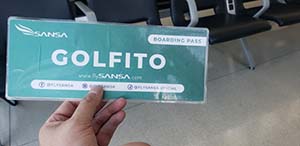
The boarding pass is laminated. No name. No seat number. Just a piece of plastic that says, essentially, good luck. It feels less like boarding a flight and more like being selected for a very polite experiment.
I’m going to Golfito.
Not because it’s famous. Not because it’s beautiful (though I hope it is). I’m going because an American couple said yes to me on a site called Workaway — like Worldpackers, but somehow even more built on trust and optimism. They’re looking for help, and in exchange, they offer room and board. This is how extended travel becomes possible. This is how you stay long enough for a place to matter.
I applied to Workaway hosts all over the world. They were the first to say yes.
So I booked a flight to Costa Rica.
At the time, I did not know where Costa Rica was.
When I interviewed with them, they told me Golfito wasn’t a typical tourist destination. People don’t come here for postcards, apparently. That didn’t matter to me. I wasn’t here to see things. I was here to heal. Tourism felt irrelevant.
The plane takes off and immediately begins shaking like it has a strong opinion about the decision. I think of every movie where someone says, “It’s a little bumpy that’s normal”, right before things escalate. I grip the armrest lightly, still pretending to read, as if literature will protect me.
Eventually, we land. I breathe out a sigh of relief that feels earned.
The airport is…. minimal. A small building. Smaller than a Tim Hortons donut shop. We get off the plane and collect our bags directly from the cargo hold. No carousel. No announcements. Just a fence gate and the sense that if you miss your bag, that’s on you.
Outside, I find a taxi. Broken Spanish again. “Kilómetro cinco, por favor“.
There are no addresses here. Just landmarks and distance from landmarks. Like “200 metres from the police station” kind of address.
The airport is at kilometer zero. I’m going to kilometer five. The math checks out. The universe approves.
I arrive at my hosts’ place. No one is home.
I wait. I check messages. And then a neighbor lets me in. Later, I learn she’s also the housekeeper. The sweetest woman you will ever meet. She shows me my room, gestures kindly, and says, in broken English: “Welcome, home“.
It lands harder than I expect.
Home. Not “welcome here“. Not “you can stay“. Home. The word hangs in the air, quiet but insistent, like it’s foreshadowing something I don’t have language for yet.
The place is huge. I wander carefully, touching nothing unnecessarily, because of course I am in strangers’ home. I make myself a small lunch, unsure what food is communal and what is sacred. I eat like a guest who wants to be invited back.
Hours later, my hosts arrive along with another couple who are also Workawayers. And suddenly, the tension dissolves. Conversation flows easily. Stories trade places. We play games. Laugh. The kind of laughter that doesn’t ask you to perform or explain.
It feels strangely familiar. Like we’ve known each other longer than we have. Like we all arrived carrying different versions of the same fatigue.
By the end of the night, the fear I brought with me to Costa Rica has quieted. Not gone but softened. The unknown no longer feels hostile. Just uncharted.
If this were a movie, this would be the moment where the character realizes they didn’t make a mistake. The place is strange. The plane was terrifying. The plan is still loose.
But they’re safe.
I go to bed knowing one thing for sure: I’m exactly where I’m supposed to be.