
The bus leaves San José at 5:00 a.m.
Not metaphorically. Not around five. Five means five.
The sky is still undecided, the city half-asleep, when I board with 4 suitcases and the quiet knowledge that today will take longer than it should. Everyone knows this about the Costa Rica Nicaragua border. You don’t schedule your day around it.
You surrender your day to it.
The ride north takes five hours. Enough time for the bus to warm, for conversations to soften, for sleep to come and go in fragments. I watch the scenery shift from urban edges to farmland, the road slowly narrowing, like the world is funneling us toward a single checkpoint.
Peñas Blancas.
The bus stops. The air hits immediately.
This is why you come early. Not for efficiency for survival. By mid-morning, the heat will turn the border into a test of patience and hydration.
We disembark. Hoards of locals are rushing you to sell you something.
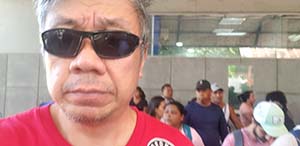
We ignore them and join the first line.
Costa Rica exit.
It moves slowly. Painfully. A choreography of stamps, questions, forms passed back and forth. People shift their weight from foot to foot, eyes locked forward, as if looking away might reset their progress. Somewhere behind me, someone sighs too loudly. Somewhere ahead, a family debates whether they brought enough cash.
Eventually, I’m stamped out.
And then comes the walk.
About a kilometer of nothing.
No shade.
No vendors.
No shortcuts.
A sun-bleached strip of land between two countries, often described as a kind of no-man’s-land. Not hostile –just indifferent. You carry your bags. You carry your thoughts. The road stretches ahead, flat and exposed, heat rising off the gravel road like a mirage.
I walk slowly. Not because I’m tired, but because I feel the weight of it.
This space isn’t about borders. It’s about in-between.
I’m no longer where I was, but not yet where I’m going. There’s no stamp for that moment. No officer to acknowledge it. You just keep moving.
On the other side, another line waits.
Nicaragua entry.
Longer. Slower. Louder. Paperwork changes hands. Bags are opened. Fees are paid. The sun climbs higher, and the patience I packed carefully in the early morning begins to thin.
But eventually –always eventually– I’m through.
A stamp lands on the page. A small sound. A quiet finality.
Welcome to Nicaragua.
The return trip weeks later is almost identical. Same early bus. Same lines. Same heat. Same walk through the exposed stretch of road.
But I am not the same person crossing back.
The first time, I walked with anticipation nervous, open, unsure of what waited for me on the other side.
The second time, I walked with clarity. I knew what I was leaving behind, and I knew why.
Borders are strange like that. They don’t change you in the moment. They reveal what has already shifted. Standing in that unshaded kilometer, I realized how much of my journey had lived in spaces like this –between jobs and identities, between relationships and solitude, between exhaustion and curiosity.
Crossing from Costa Rica into Nicaragua wasn’t just a logistical hurdle. It was a decision. One made with my feet, step by step, under a relentless sun.
And coming back wasn’t a retreat. It was a return –with more awareness, fewer illusions, and a deeper understanding of what I was carrying.
Some crossings are stamped into your passport.
Others are stamped somewhere quieter.
You don’t notice them until you’re already on the other side.