
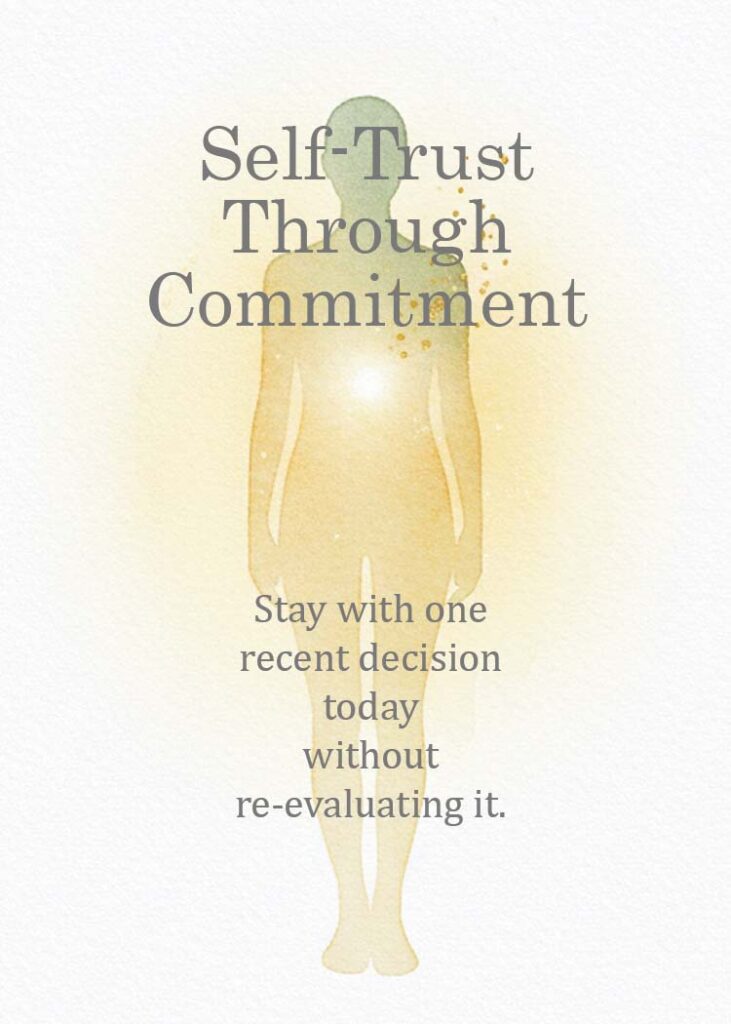
Self-trust is not proven at the moment of decision.
It is proven in what happens next.
Many people doubt themselves not because their choice was wrong, but because they abandon it too quickly. The moment discomfort appears, they reinterpret the decision as a mistake rather than part of the process.
This creates a cycle of second-guessing.
You never stay with a choice long enough to see what it can teach, reveal, or build. Each reversal weakens confidence, not because you chose poorly, but because you didn’t remain present with the consequences.
Self-trust develops through continuity.
When you commit to a direction and stay with it through uncertainty, your nervous system learns that you can handle outcomes even imperfect ones.
This message appears when you are tempted to retreat simply because something feels uncomfortable or unfamiliar. It asks you to distinguish between genuine misalignment and early resistance.
You don’t strengthen trust by constantly re-evaluating. You strengthen it by staying.
The message reminds you that self-trust grows when you remain with your choices long enough for clarity to mature.