
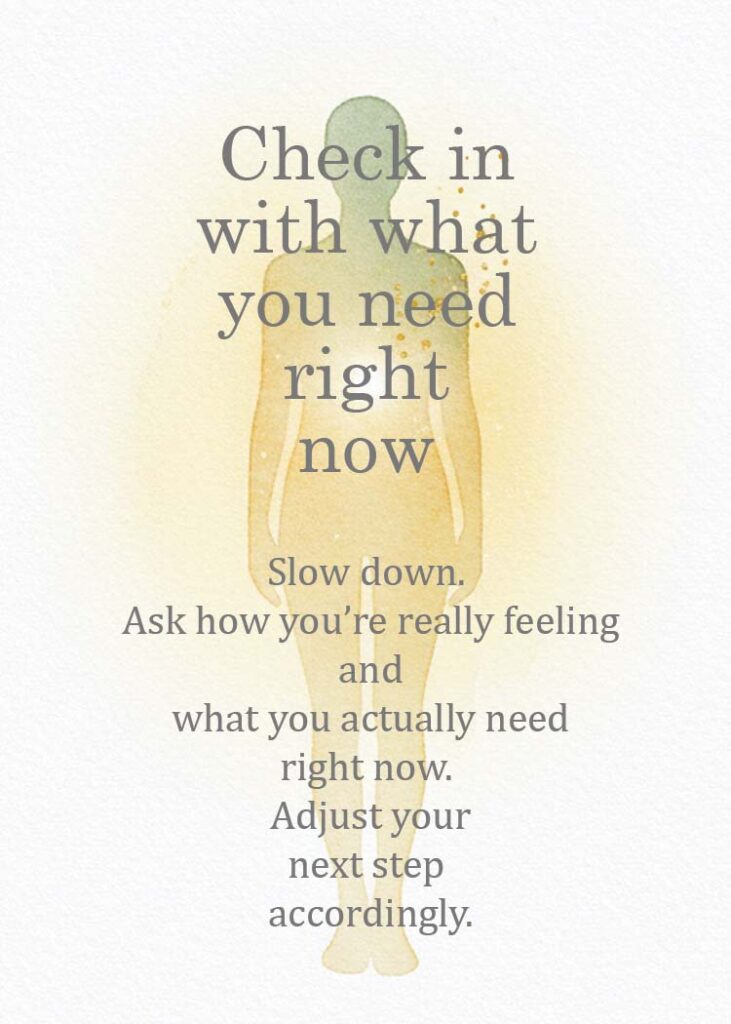
Many people move through their days responding rather than choosing. Tasks, expectations, and responsibilities stack up, and momentum takes over. Action follows action without space to notice how it feels or whether it still makes sense.
This message appears when momentum has replaced awareness.
Pausing is often misunderstood as hesitation or inefficiency, but in reality, it is a form of precision. When you slow down long enough to check in with yourself, you interrupt automatic behavior and return agency to the present moment. Without this pause, it becomes easy to override emotional signals, ignore physical limits, and continue patterns that no longer serve you.
A lack of pause doesn’t usually feel dramatic at first. It shows up subtly mild exhaustion, irritability, detachment, or a sense of pushing through instead of moving with intention. This message tends to arrive before burnout becomes unavoidable. It is preventative rather than corrective.
Checking in does not require deep analysis. It requires honesty. Asking yourself how you are actually feeling and what you actually need creates alignment between intention and action. When that alignment is missing, even productive effort can lead in the wrong direction.
Working with this message means creating a brief interruption in your routine. Before your next task or decision, stop. Notice your internal state without trying to change it. Adjust your pace, priority, or approach based on what you observe, even if the adjustment feels minor.
Small pauses practiced consistently prevent large breakdowns later. Awareness, not endurance, is what sustains clarity over time.
The message reminds you that intentional pauses restore clarity and allow your actions to come from awareness rather than habit.