
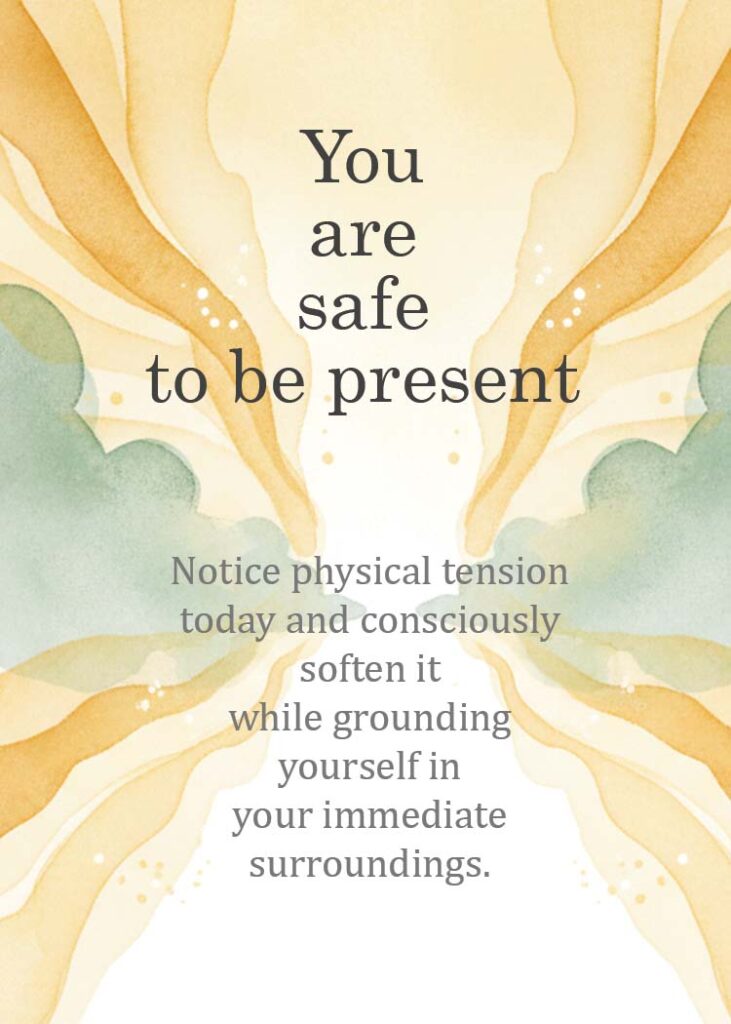
Many people remain hypervigilant even in neutral or safe environments.
This constant readiness keeps the nervous system engaged long after actual threats have passed.
The body stays alert through subtle muscle tension, shallow breathing, and scanning for cues. Over time, this state becomes familiar and is mistaken for normal functioning, even though it prevents rest and presence.
Feeling safe enough is not a cognitive conclusion. It is a bodily experience that emerges when the nervous system receives consistent signals of stability.
When the body begins to register safety, attention widens and defensive patterns soften. The mind becomes less preoccupied with protection and more available for perception, connection, and choice.
This message emphasizes that true presence depends on bodily reassurance, not mental reassurance.